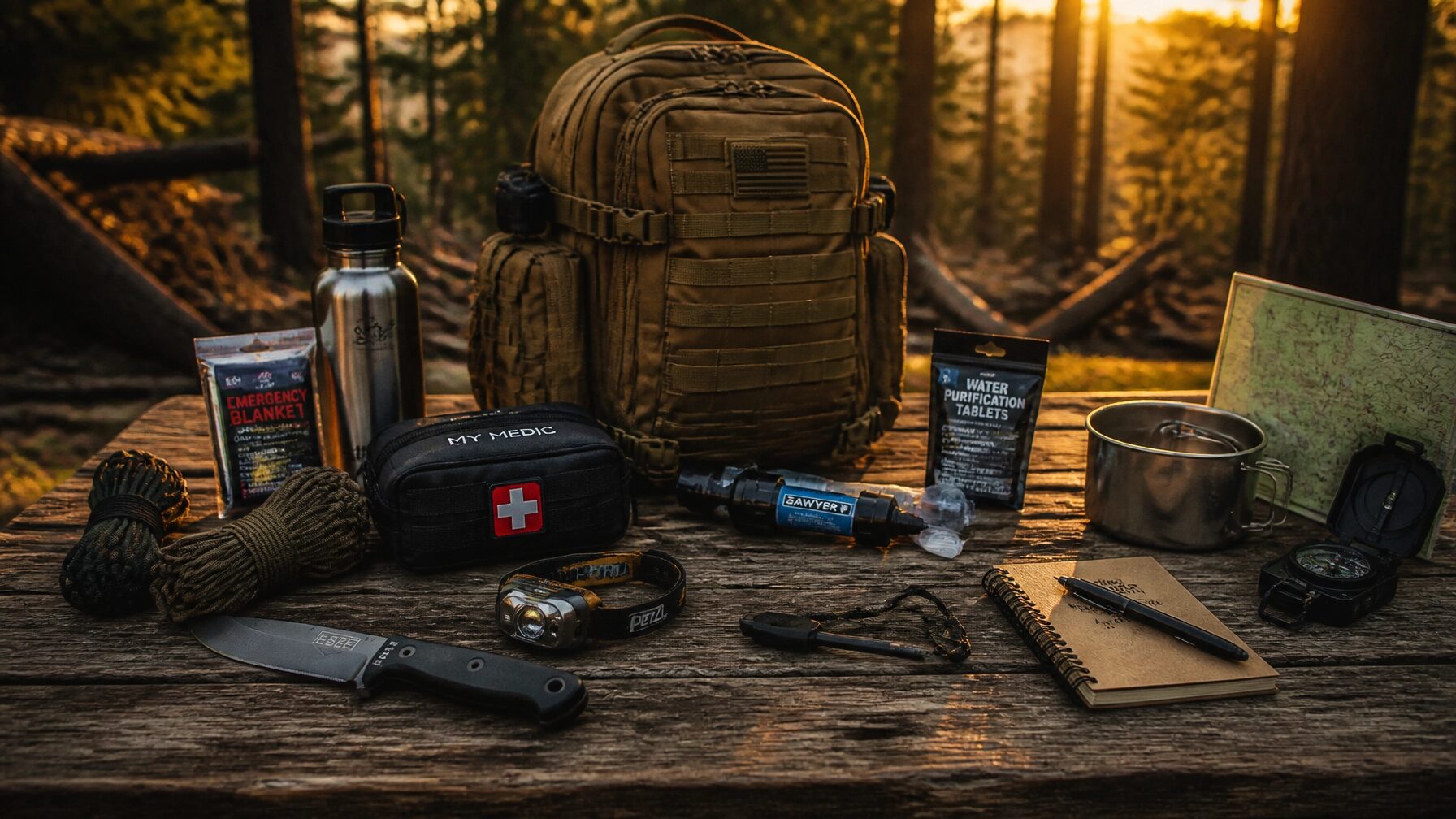
Listen close, because I’m not here to sugarcoat reality. Most of you reading this think you’re prepared because you bought a “72-hour bag” off some generic survival site and tucked it under your bed.
You’re wrong.
In a real-world crisis: whether it’s a grid-down scenario in the Eastern Woodlands or a flash flood that cuts off your town: that store-bought kit isn’t a lifeline; it’s a false sense of security. I’ve spent decades in the brush, from my early days as a Scout to mastering solo survival in the thickest timber, and I’ve seen gear fail and “preppers” crumble when things get visceral.
Your emergency survival kit is a tool, not a magic talisman. If you don’t know how to use it, or if it’s filled with junk, you’re just a well-equipped casualty. Let’s break down the tactical errors you’re making and how to fix them before the clock starts ticking.
1. The “Store-Bought Savior” Fallacy
The biggest mistake beginners make is buying a pre-assembled kit and calling it a day. These kits are built for profit, not for your specific survival. They use the cheapest flashlights, the thinnest “space blankets,” and food that tastes like salted cardboard.
The Strategy: Treat a commercial kit as a baseline, nothing more.
The Fix: You need to audit every single item. If it’s a “no-name” brand tool, throw it out. Replace it with gear you’ve tested. Your kit must be tailored to your climate and your family’s medical needs. A kit designed for the desert won’t help you much when you’re dealing with the damp, bone-chilling humidity of the Eastern Woodlands.
2. Ignoring the “Skill > Gear” Equation
I’ve seen guys with $5,000 worth of titanium gear who couldn’t start a fire with a blowtorch in a light breeze. They have the “tactics” (the tools) but no “strategy” (the knowledge).

Do you have a ferro rod in your bag? Good. Have you ever actually used it to ignite a bird’s nest of natural tinder when your hands were shaking from cold? Probably not.
The Strategy: Skill is the only thing that doesn’t add weight to your pack.
The Fix: Stop buying and start doing. Learn the essential survival skills for fire-making before you need them. If you have a 7-in-1 survival whistle, know the international signals. Gear is just a force multiplier for your existing skills.
3. The “Tough Guy” Water Math
Humans are basically walking bags of water. If you run out, your brain stops making good decisions in about 24 hours. Most kits include a few 4oz pouches of water. That’s a joke. You need a gallon per person, per day, just to maintain baseline cognitive function.
The Strategy: Don’t just carry water; carry the ability to make water.
The Fix: You can’t carry enough water for a week-long trek. You must have a multi-stage purification strategy: a high-quality filter, purification tablets, and a metal container to boil in. Water safety is non-negotiable, whether you’re at home or operating on the water.
4. Building an 80lb Anchor
I see it all the time: the “kitchen sink” bag. People pack every knife, stove, and gadget they own. If your bug-out bag weighs 80 pounds and you aren’t a seasoned ruck-marcher, that bag is an anchor. It will destroy your knees and slow you down until you’re forced to abandon it.

The Strategy: Mobility is life.
The Fix: Follow the “ounces equal pounds” rule. Use the financial side of prepping to invest in high-quality, lightweight gear rather than bulk. Pack your bag and walk five miles. If you can’t maintain a brisk pace, start cutting the “nice-to-haves” until you’re left with the “must-haves.”
5. Forgetting the “Paper Trail” and Cold Cash
In a localized disaster, the grid might be down, but society hasn’t collapsed: yet. Your credit cards won’t work if the power is out, and the “ignorant” masses will be fighting over the last loaf of bread. You need “tactical liquidity.”
The Strategy: Prepare for the transition period, not just the apocalypse.
The Fix: Keep $200–$500 in small bills (ones, fives, and tens) in a waterproof pouch. No one is going to give you change for a hundred-dollar bill when the world is ending.

Also, include physical copies of your ID, insurance, and land deeds. If you’re planning on moving to self-sufficiency, you need to protect your assets.
6. Buying Cheap Steel and Plastic
There is a time to save money, and there is a time to spend it. Your emergency survival kit is not the place to be a cheapskate. A $10 knife will snap when you try to baton wood. A cheap flashlight will leak battery acid and fail when you’re trying to navigate a dark trail.
The Strategy: Buy once, cry once.
The Fix: Invest in professional-grade gear. We’ve reviewed plenty of outdoor essentials that won’t fail you. If your life depends on a tool, that tool should be the best you can possibly afford.
7. Maintenance Paralysis
You built your kit in 2022 and haven’t opened it since. Newsflash: batteries leak, food expires, and medications lose potency. If you grab that bag today and find your flashlight is dead and your first-aid ointment has turned into liquid, you’re in trouble.
The Strategy: A kit is a living system, not a time capsule.
The Fix: Set a recurring alarm on your phone for every six months. Check your expiration dates. Swap out your seasonal clothing (don’t get caught with summer gear in a July blizzard). Replace your water. If you don’t maintain your gear, your gear won’t maintain you.
The Bottom Line
Survival isn’t about the gear you buy; it’s about the resolve you have and the preparation you’ve done. You can read every prepping guide on the internet, but if you don’t have the guts to train and the discipline to maintain your kit, it’s all just noise.
Don’t be the fool who waits for the sirens to start before checking their bag. Get tactical. Get prepared.
Stay sharp, stay self-sufficient.